
Oral Placement Therapy in Delhi, Greater Kailash I
Families asking about oral placement therapy in Delhi can contact JHANAK in Greater Kailash I to discuss the specific speech or feeding concern. An appropriate professional should first assess the difficulty, explain their scope and identify a functional goal. Oral placement work should not replace communication support or be offered as a guaranteed route to speech.
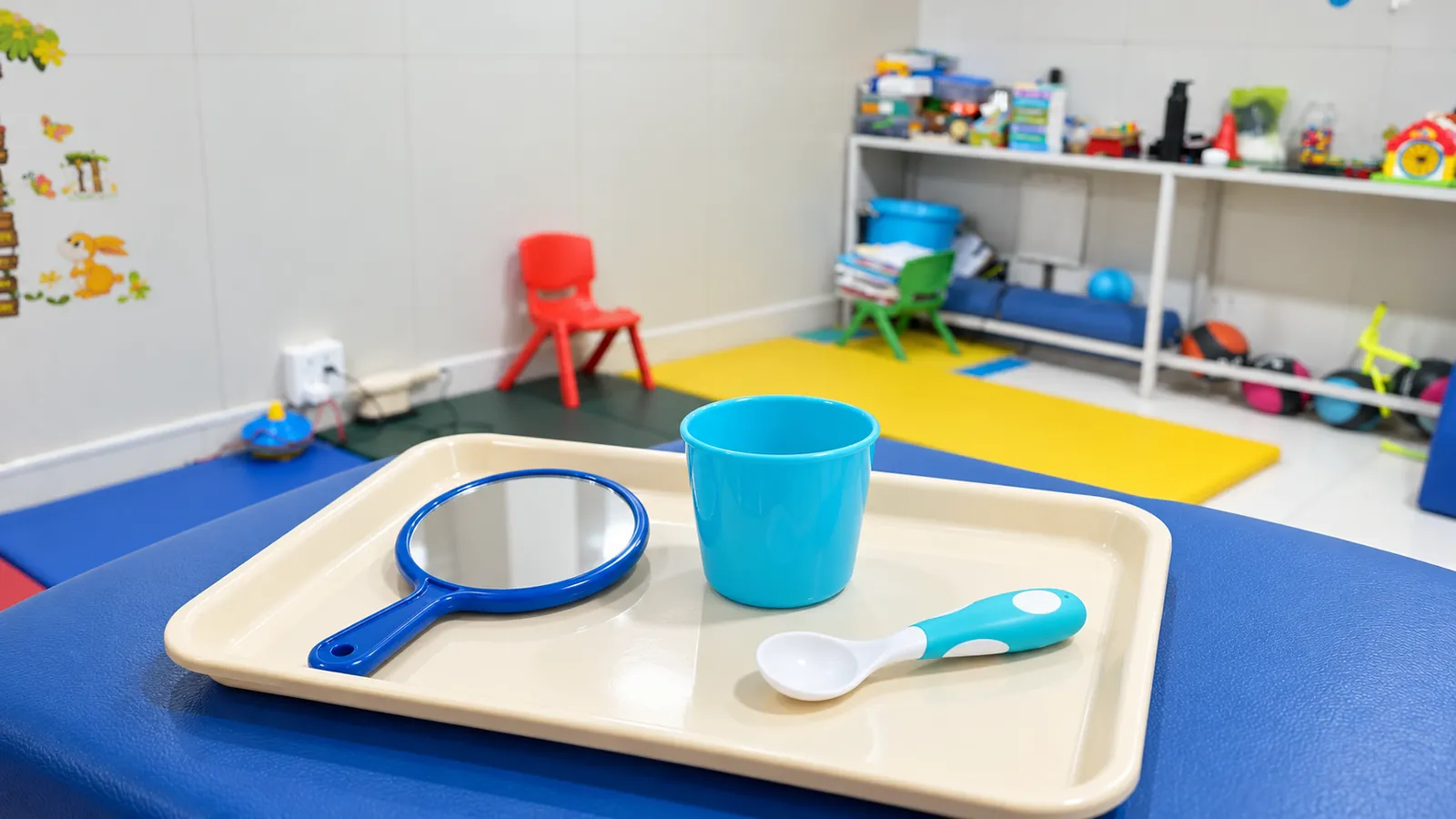
Oral Placement Therapy (OPT)
Supporting oral-motor awareness and placement for selected speech and feeding goals.
Oral Placement Therapy uses specific techniques and, where appropriate, tools or tactile cues to support awareness, placement and movement of oral structures. It may be considered for selected children following an appropriate assessment by a trained professional.
Who may benefit
Children with specific oral placement, awareness, movement or feeding-related concerns may be considered for assessment. Suitability depends on the child's individual presentation and the clinician's professional scope.
Areas we may work on
- Lip awareness, closure and movement
- Tongue placement and movement
- Jaw stability and coordination
- Oral sensory awareness
- Selected chewing and feeding-related skills
- Support for speech placement targets when clinically indicated
Our approach
- Individualized oral placement activities
- Tactile or proprioceptive cues when appropriate
- Use of suitable oral placement tools only when clinically indicated
- Integration with functional speech or feeding goals
- Caregiver education where appropriate
How the process works
- Parent consultation and review of concerns
- Oral-motor, speech or feeding-related assessment within professional scope
- Identification of specific functional goals
- Individualized intervention by an appropriately trained clinician
- Review of progress and recommendations
Important: OPT is not a stand-alone treatment for autism or non-speaking communication, and it should not be described as a guaranteed way to improve speech. Non-speech oral-motor exercises alone do not reliably improve speech intelligibility; functional speech practice remains important.
Questions families ask
No. Oral placement work concerns selected oral awareness or movement targets. Communication support may include understanding language, expressing needs, speech sounds or AAC. An appropriately qualified professional should explain which goal is being addressed and why the proposed approach is suitable.
No. Oral placement work should not be offered as a guaranteed route to speech or a stand-alone treatment for autism. Ask about the evidence for the specific target and how functional speech or communication practice will remain part of an appropriate plan.
The assessment should be within the training and professional scope of the clinician seeing your child. Describe the concern when enquiring so the clinic can clarify the appropriate professional and any referral needed.
Ask what the tool is intended to address, why it is suitable for the child and how comfort and consent will be considered. Do not begin a generic tool-based programme from a website; recommendations need an individual assessment.
Contact JHANAK at its Greater Kailash I centre with the concern and any relevant existing reports. The team should confirm the appointment scope, available professional and visit details. Sessions, tools and outcomes should not be assumed from the service name alone.