
Intake Open: Greater Kailash I Center
neurology
CONDITIONS WE SUPPORT • PEDIATRIC NEUROMOTOR CARE
Cerebral Palsy Support in Greater Kailash I
Support for a child with cerebral palsy should reflect their individual needs and the activities that matter to them. Explore questions about movement, communication, daily participation and coordination with treating professionals.
physical_therapy
Multi-Disciplinary OT & PT
record_voice_over
Adaptive & AAC-Integrated
location_on
Greater Kailash I, New Delhi
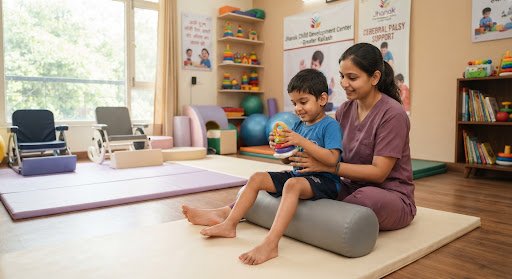
Neuro-Affirming Stance
Evidence-Based
Grounded in neuroplasticity: prioritizing functional posture, autonomy, and communication over forced normalization.
Scientific Perspective & Hope
Understanding Cerebral Palsy: Movement, Posture & Potential
Cerebral palsy is a non-progressive umbrella condition arising from early neurodevelopmental variations that influence the brain’s communication with muscle groups, motor pathways, and postural equilibrium. Crucially, while the initial brain event is non-progressive, the child’s brain is dynamically growing. Through responsive neuroplasticity, appropriate adaptive equipment, and structured therapeutic repetition, children can continually develop compensatory motor pathways, functional independence, and enriching self-expression.
family_restroom
The "F-Words" in Childhood Disability
Our clinical care adheres to internationally respected neuro-pediatric frameworks championed by CanChild: prioritizing Function, Family, Fitness, Fun, Friends, and Future over rigid clinical scores.
Child-first philosophy
arrow_forward
accessibility_new
Proactive Tone & Posture Modulation
Targeted positioning, dynamic weight-bearing, orthotic alignment, and gentle myofascial elongation prevent secondary joint contractures, pain, and skeletal deformities while maximizing comfortable mobility.
Preventive & Protective
arrow_forward
hub
Multi-System Synchronized Care
Motor control does not exist in isolation. Our therapists collaborate on breath mechanics, feeding safety (dysphagia), sensory processing, adaptive communication (AAC), and ergonomic seating simultaneously.
Holistic child integration
arrow_forward
Clinical Subtypes & Presentations
Every Child’s Neuromotor Profile is Unique
Rather than placing children into restrictive boxes, we assess individual muscular tone dynamics and sensory-motor regulation to tailor exact support.
straighten
Spastic Presentation
Characterized by increased muscular resistance and tightness. Interventions emphasize sustained muscle lengthening, gentle weight transfers, active reciprocal motor training, and dynamic orthotic positioning.
Key Priority:
Preventing contractures & promoting fluid movement arcs.
waves
Dyskinetic & Athetoid
Fluctuating muscular tone with involuntary or variable movement patterns. We build midline orientation, deep trunk and proximal core stability, and provide rhythmically stabilized play strategies.
Key Priority:
Midline trunk stability & purposeful functional control.
balance
Ataxic Presentation
Primarily involves balance equilibrium and movement coordination. Our protocols utilize calibrated proprioceptive inputs, vestibular integration, weighted cues, and graded stepping paradigms.
Key Priority:
Spatial security, vestibular balance & confident gait.
tune
Mixed Neuromotor Patterns
A blend of spastic and athetoid tone shifts across different limbs and body zones. Requires continuous clinical tailoring by physical, occupational, and speech therapists working in precise harmony.
Key Priority:
Modular routines tailored to changing day-to-day tone.
Comprehensive Therapeutic Reach
Where Multidisciplinary Care Transforms Daily Life
We look past isolated clinical symptoms to build meaningful capability, sensory contentment, and active participation in family and social life.
airline_seat_recline_extra
Postural Alignment & Adaptive Seating
Optimal pelvic and spinal positioning frees up head control, eye contact, and respiratory reserve. We prescribe and calibrate custom modular seating, corner chairs, and standing frames that prevent fatigue.
Focus: Ergonomic symmetric posture
directions_walk
Locomotor Mobility & Gait Mechanics
Using body-weight-supported harness systems, dynamic gait trainers, and individualized orthotic management (AFOs/SMOs) to expand walking confidence, transfer skills, and outdoor movement.
Focus: Safe independent mobility
pan_tool_alt
Fine Motor & Bi-Manual Hand Function
Re-educating grasp, reach, and voluntary finger release through Constraint-Induced Movement Therapy (CIMT) principles, adaptive grips for pencils, and joyful play-based tabletop games.
Focus: Grasp release & school dexterity
forum
Speech, Dysphagia & AAC Communication
Safe oral-motor swallow therapies ensure nutrition without aspiration. Concurrently, Augmentative and Alternative Communication (AAC) high/low-tech tools give every non-verbal child an authentic voice.
Focus: Swallowing safety & expressive voice
spa
Sensory Processing & Somatic Comfort
Children with CP frequently experience tactile hyper-reactivity, startle sensitivities, or altered body schemas. Ayres Sensory Integration calms nervous systems to facilitate restful sleep and calm days.
Focus: Pain mitigation & nervous regulation
self_improvement
Adaptive Living & Autonomous Dignity
Equipping children and parents with modified clothing closures, adapted spoons and plates, supported washroom techniques, and independent transfer skills that nurture profound personal dignity.
Focus: Personal autonomy & privacy
Our Clinical Process
The Jhanak 4-Step Collaborative Pathway
A predictable, transparent, and empathetic methodology ensuring family partnership at every single juncture.
1
Comprehensive
Neuromotor Assessment
Detailed evaluation of GMFCS and MACS functional levels, joint range of motion, muscle tone distribution, swallowing patterns, and direct parent lifestyle listening.
2
Collaborative
Multidisciplinary IEP
Physiotherapists, OTs, and Speech therapists unite with the family to craft realistic, joyful, and measurable functional milestones mapped across 12-week cycles.
3
Targeted
Active Intervention therapy area
Support for cerebral palsy should relate to the child’s individual activities, comfort and medical needs. Discuss the professional roles and adaptations relevant to your family.
4
Community
Home & School Inclusion
Empowering caregivers with ergonomic transfer techniques and directly advising educators across South Delhi on seating, scribe access, and inclusive participation.
Educational Partnership
Collaborative School Inclusion Across South Delhi
True independence includes the classroom. The Jhanak clinical team proactively partners with mainstream and inclusive schools across Greater Kailash, Vasant Vihar, Saket, and Panchsheel Park to ensure children with cerebral palsy are actively supported rather than sidelined.
check_circle
Ergonomic classroom desk & footrest calibration
check_circle
Digital tablet & eye-gaze / switch access setup
check_circle
Peer sensitization and fatigue pacing strategies
check_circle
CBSE / IB / Cambridge exam concession advocacy
school
School Liaison Officer
Need our therapist to attend an IEP school conference or inspect your child’s classroom seating?
Caregiver Nurturance
Empowering the Family: Home Handling & Caregiver Well-Being
Caregiving should feel warm and connected, not exhausting. We train parents and family attendants in gentle handling techniques that protect their own backs while encouraging the child’s active effort.
front_hand
Dignified Transfer Methods
Learn biomechanically sound rolling, lifting, and chair-to-bed transfers that avoid straining the caregiver’s spine and cue the child to assist with postural bracing.
Safety First
sports_esports
Playful Stretching Routines
Transform clinical stretching battles into musical games, singing stretches, and cozy bedtime massage that soften tone without inducing fear or distress.
Zero-Tears Play
chat_bubble
Everyday AAC Immersion
Placing communication boards, high-contrast symbols, or core vocabulary boards right at the dining table, bathroom, and car to normalize constant expressive choices.
Expressive Independence
award_star
Honoring Micro-Milestones
We guide families to notice and celebrate the victories: a sustained five-second head lift, an uncurled open palm, or intentional gaze pointing during mealtime.
Nurturing Hope
Faculty & Specialists
Our Pediatric Neuromotor Specialists
Dedicated, university-accredited therapists with intensive international clinical exposure in pediatric neurological rehabilitation.
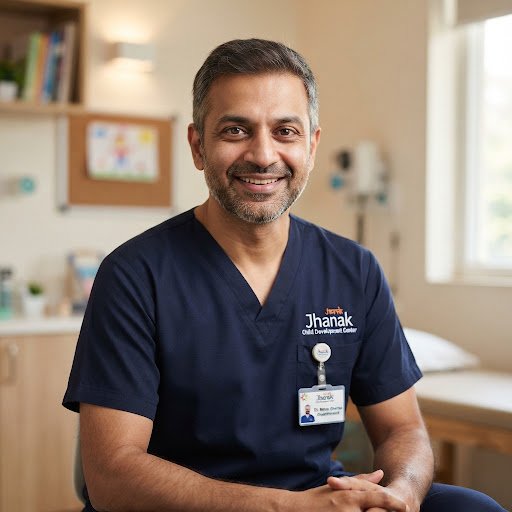
Confirm relevant qualifications with the centre.
14+ Yrs Exp
Dr. Prashant Kumar (PT)
Director & Lead Pediatric Physical Therapist
Specialized in neuro-developmental therapy (NDT), pediatric gait rehabilitation, post-botox tone management, and customized orthotic prescription.
MPT (Pediatrics)
Greater Kailash I
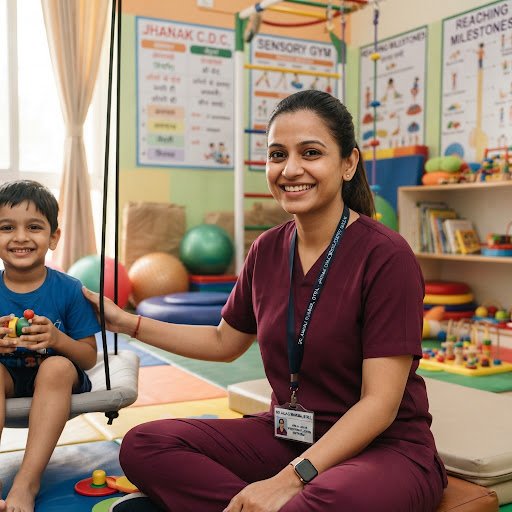
Confirm relevant qualifications with the centre.
10+ Yrs Exp
Sneha Banerjee (BOT, MOT)
Senior Pediatric Occupational Therapist
Mastery in Ayres Sensory Integration, adaptive seating ergonomics, fine-motor bi-manual hand therapy (HABIT), and childhood independence skills.
MOT (Neuro-Pediatrics)
Greater Kailash I

Confirm relevant qualifications with the centre.
9+ Yrs Exp
Ask about the available professional
Speech, Dysphagia & AAC Specialist
Ask which professional can assess communication or feeding concerns and what their scope covers.
Confirm relevant qualifications with the centre.
Greater Kailash I
Clear Answers For Caregivers
Frequently Asked Questions
Honest, medically grounded answers about therapy progression, timelines, and practical expectations.
We provide fully integrated care under one roof in Greater Kailash I: Pediatric Physiotherapy (gait, balance, dynamic stretching, weight-bearing), Pediatric Occupational Therapy (sensory integration, bilateral hand function, adaptive seating), Speech-Language Therapy, Pediatric Feeding/Dysphagia Therapy, and AAC (Augmentative and Alternative Communication) systems.
The Gross Motor Function Classification System (GMFCS) and Manual Ability Classification System (MACS) are globally standardized 5-level scales describing a child’s current functional abilities rather than their limitations. They help us set realistic, dignified goals, select the right assistive chairs or walkers, and track functional progress over time.
Absolutely. We believe multidisciplinary medical-therapeutic synergy is vital. We routinely coordinate with leading pediatric neurologists and orthopedic specialists across AIIMS, Max Super Speciality, Fortis, and Apollo in Delhi NCR, providing detailed progress notes, pre- and post-Botox clinical logs, and post-surgical rehabilitation regimens.
The earlier the better. During the first two years of life, the infant brain exhibits peak neuroplasticity. Early intervention can guide muscle symmetry, prevent early joint tightness, stimulate head control, and cultivate reciprocal motor pathways before secondary habits form. However, children of any age benefit meaningfully from targeted functional therapy.
Yes, many children with cerebral palsy attend mainstream schools under India’s Rights of Persons with Disabilities (RPwD) Act 2016. With the right accommodations—such as calibrated seating, scribe assistance, digital exam software, AAC devices, and fatigue-managed schedules—children can learn, socialize, and thrive alongside peers. We actively write accommodation guidance for schools.
Begin With Hope
Every Child Deserves Understanding, Dignity and Purposeful Care
Take the first step toward a personalized, compassionate neuro-developmental program. Our clinical coordinators in South Delhi will listen deeply to your journey without judgment or false promises.
location_on
Greater Kailash I Centre
R-274, Block R, Greater Kailash I, New Delhi 110048
call
Clinical Desk
Use the online contact form for enquiries.
chat
Instant Parent Helpline
verified_user
Ethical Practice Guarantee: Jhanak does not promote unverified cures, aggressive experimental treatments, or unrealistic recovery guarantees. We adhere to clinical protocols endorsed by AACPDM and AIOTA.
Book an Initial Clinical Consultation
Confirm appointment timing and the next step directly with the centre.