+91 76785 09500

/

+91 11 4100 XXXX

|

Use the online contact form for enquiries.

|

R-274, Block R, Greater Kailash I, New Delhi

Please confirm visit hours when booking.

|

Intake Available: Greater Kailash I Centre • Adherent to ASI® Fidelity Benchmarks
neurology Ayres Sensory Integration (ASI®) Specialized Care

Sensory Processing Support in Greater Kailash I

Different responses to sound, touch or movement can affect everyday participation. Explore sensory concerns in context and the questions to discuss with an appropriately qualified professional.

Confirm relevant professional training CLASI & SIPT Qualified clinical faculty
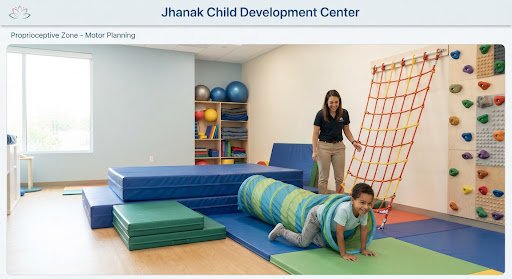
Ask about the professional’s experience relevant to your child’s concern. GK-I suspended apparatus suites
Zero Restraint Protocol Child-led co-regulation principles
Child development support
balance
Sensory Equilibrium Index Individual goals and review
heart_check
Autonomic Safety
Vagal nerve regulation through play
Comprehensive Neurobiology

The 8 Sensory Systems Explained

Most caregivers grow up learning only five senses. In developmental neuroscience, human equilibrium, emotional stability, and executive focus rely just as critically on balance, joint compression, and visceral gut-brain messaging.
lightbulb Interoception & Proprioception govern 65% of nervous system calm
rotate_right

1. Vestibular

Inner Ear
Detects movement, velocity, and gravity. Informs gravitational security. Over-responsive children panic when feet leave the ground; seekers spin incessantly without dizziness.
priority_high Clue: Refusing stairs or swings
accessibility_new

2. Proprioception

Joints & Muscles
Body schema and force grading. Tells the brain where limbs are in space. Deficiencies manifest as stomping, crashing into sofas, chewing cuffs, or breaking pencil tips from over-gripping.
priority_high Clue: Constant crashing & firm hugs
fingerprint

3. Tactile

Skin Receptors
Processes light touch, deep pressure, temperature, and pain. Defensiveness triggers acute distress from clothing tags, sock seams, haircut shears, or gooey finger paints.
priority_high Clue: Tag clipping & walking barefoot
monitor_heart

4. Interoception

Internal Organs
Internal sensing: hunger, dehydration, full bladder, nausea, and rapid heartbeats. Children missing these signals have delayed toilet training or explosive outbursts triggered by unnoticed hunger.
priority_high Clue: Unrecognized hunger or wet pants
hearing

5. Auditory

Sound Filtering
Auditory filtering and acoustic modulation. In crowded Indian settings, hyperacusis triggers terror at pressure cooker whistles, Diwali firecrackers, hand dryers, or kitchen mixer blenders.
priority_high Clue: Covering ears in standard noise
restaurant

6. Oral / Gustatory

Taste & Texture
Oral sensory registration. Often misunderstood as stubborn picky eating; children gag on mixed textures (e.g., lentils with grains) or chew relentlessly on plastic toys to satisfy oral proprioception.
priority_high Clue: Severe texture gagging
air

7. Olfactory

Direct Limbic Route
Scent pathways hook directly into memory and emotional survival circuitry. Heightened sensitivity causes nausea around school cafeterias, temperings (tadka), deodorants, or incense smoke.
priority_high Clue: Retraction from routine food aromas
visibility

8. Visual

Ocular Processing
Visual modulation and figure-ground discernment. Overwhelmed by spinning ceiling fans, tube light flickers, or crowded classroom boards. May shield eyes or squint under everyday sunlit rooms.
priority_high Clue: Headaches from overhead tube lights
Neuro-Affirming Typology

Understanding Your Child’s Unique Sensory Profile

Children are rarely just “one thing.” A child can intensely avoid loud echoes while vigorously seeking heavy muscle compression. Our ASI® diagnostics pinpoint where their neurotype falls on the threshold continuum.
electric_bolt High Threshold

Sensory Seeker

Their nervous system requires high volume or intense velocity to register stimulation. They actively chase sensations to stay alert and organized.
Observable Indicators:
• Restless jumping & constant movement
• Deliberate rough crashes into furniture
• Loves spinning until adults feel dizzy
Clinical Strategy: Heavy work, resistance therapy, linear swinging.
shield Low Threshold / Hyper

Sensory Avoider

Their nervous system detects ordinary signals as intense or threatening. They retreat or meltdown to protect themselves from neurological flooding.
Observable Indicators:
• Meltdowns at Select CITYWALK / M-Block
• Complete refusal of tags or rough jeans
• Terror on open swings or escalators
Clinical Strategy: Desensitization, noise-cancellation, predictable pacing.
timer Hypo-Reactive

Low Registration

The brain misses incoming sensory cues entirely. The child appears lethargic, unengaged, or unaware of environmental shifts and physical pain.
Observable Indicators:
• Doesn’t react to cuts, scrapes, or heat
• Walks into door frames regularly
• Appears perpetually sleepy or slouched
Clinical Strategy: Fast alerting vestibular cues, cold stimuli, bright acoustics.
directions_run Dyspraxia Spectrum

Motor Disorder (Dyspraxia)

Trouble planning and executing unfamiliar physical actions due to inaccurate feedback from proprioceptive and vestibular tracks.
Observable Indicators:
• Difficulty with buttoning or shoe laces
• Frequent tripping over own feet
• Slumped posture at school study desks
Clinical Strategy: Motor praxis sequencing, bilateral integration training.
The GK-I Therapeutic Infrastructure

Ask about the professional’s experience relevant to your child’s concern.

Sensory integration therapy should be considered in relation to the child’s assessed needs and daily activities. Ask about the proposed approach, the professional’s qualifications and how meaningful goals will be reviewed.

verified ASI® Fidelity Measure (Ayres Sensory Integration) Standards

Ask about the suitability, supervision and safety arrangements for any proposed equipment or activity.

Child development support
Suspended Systems

Dual-Axis & Bolster Swings

Provides rhythmic linear vestibular input to down-regulate sympathetic fight-or-flight agitation or rapid rotational stimulation to activate under-responsive tone.
Child development support
Heavy Muscle Work

Climbing Walls & Crash Zones

Proprioceptive joints require resistive force. Our graduated bouldering walls and shock-absorbing crash cushions teach force grading without risk of injury.
Child development support
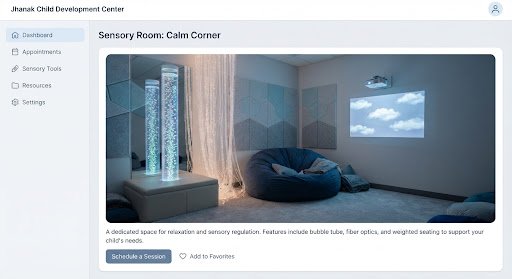
Regulation Suites

Snoezelen Decompression Pods

Acoustically isolated quiet pods equipped with fiber optic arrays, color-tunable light columns, and deep compression beanbags to de-escalate acute overload swiftly.

Clinical Ayres Sensory Integration (ASI®) vs. Commercial Playzones

Evaluation Dimension Commercial Soft-Play Malls Jhanak Sensory Sanctuary (ASI®)
Sensory Atmosphere Chaotic, blaring audio, flickering lights, high unpredictability Calibrated lighting, acoustic absorption, therapeutic safety
Therapeutic Supervision Unmonitored, peer collisions, untrained attendants Confirm the professional responsible for the proposed assessment or intervention.
Clinical Intent Pure physical exhaustion without neuro-adaptive scaffolding Specific ‘just-right challenge’ to re-wire neural pathways
Family Integration Parents wait in cafeteria detached from experience Parents taught real-time co-regulation techniques for home life
Essential Caregiver Education

Sensory Meltdown vs. Behavioral Tantrum: Knowing the Difference

Parents in Delhi often face judgmental glances in markets when their child collapses in distress. Understanding the neuro-biological divergence between a behavioral want and an involuntary nervous system flooding is the first step toward genuine empathy.
Prefrontal Cortex Driven

The Behavioral Tantrum

Goal-oriented expression of frustration caused by not getting an immediate desire (e.g., wanting a toy in Khan Market or demanding tablet screen time).
Goal Oriented: Child monitors adult reactions to evaluate if their strategy is working.
Safety Aware: Child instinctively avoids hurting themselves or landing on hard ground violently.
Instant Resolution: Abruptly ceases once the goal is achieved, alternative offered, or boundary firm.
Caregiver Action: Maintain quiet boundaries, do not negotiate during screaming, offer two simple acceptable choices.
Neurological Emergency
Amygdala Flight/Fight Hijack

The Sensory Meltdown

Involuntary neurochemical flooding caused by sensory input surpassing the child’s processing threshold. They are terrified and completely dysregulated.
Zero Audience Awareness: Child does not care who is watching. Conceding to their demands does NOT stop it.
Risk of Physical Harm: Child may thrash into walls, bite own hands, or run blindly into traffic.
Slow Autonomic Recovery: Recovery from distress varies. Explain the situation and the support your child accepts rather than relying on a fixed time estimate.
Caregiver Action (Co-Regulation): Reduce all verbal demands. Cut light and noise. Provide calm deep touch (if accepted). Protect physical safety silently.
Free Clinical Resource for Caregivers

Download the Home Sensory Diet Handbook (Delhi Edition)

A 28-page practical toolkit detailing heavy-work chores, transit desensitization strategies for Delhi Metro & traffic, pressure garments, and food texture bridging techniques authored by Dr. Prashant Kumar and our occupational therapy team.
picture_as_pdf PDF Format (3.4 MB) family_restroom Age brackets: 2–14 Years verified Evidence-Based ASI
Clear Answers for Worried Parents

Frequently Asked Sensory Questions

We demystify clinical terminology so you can make informed, loving decisions for your child.

No. Responses to sensory experiences can occur in different contexts. If the child’s wider development concerns you, ask an appropriate professional about assessment rather than drawing a diagnosis from sensory observations alone.

Children do not typically outgrow sensory integration dysfunctions without structured intervention; rather, they learn maladaptive avoidance strategies. An unaddressed sound-sensitive toddler frequently becomes a school-aged child who avoids social events, exhibits school refusal, or develops heightened generalized anxiety. Early Ayres Sensory Integration promotes neuroplastic maturation, re-wiring how the central nervous system processes stimuli naturally.

Ask an occupational therapist about the specific activity, the child’s response and whether an individual recommendation is appropriate. A named sensory diet is not a standard routine suitable for every child.

Living in Delhi brings specific acoustic challenges—honking traffic, pressure cookers, wedding processions, and temple loudspeakers. We combine Therapeutic Listening programs (specialized filtered music that trains middle-ear stapedius muscles) with gradual exposure scaffolding, active noise-filtering earplugs (like Loop or custom pediatric earmuffs), and sensory retreat routines tailored to urban apartment living.

clinical_notes GK-I Sensory Clinic Intake

Schedule an In-Depth Sensory Evaluation

Ask about the professional’s experience relevant to your child’s concern.

check_circle Detailed 12-page Neurodevelopmental Report
check_circle Personalized Home Sensory Diet Plan
check_circle Zero-Pressure, Play-Based Diagnostic Atmosphere
Jhanak Child Development Center R-274, Block R, Greater Kailash I, New Delhi
check_circle

Clinical Intake Received

Thank you for trusting Jhanak. Our Senior Sensory Occupational Therapist will review your child’s profile and call you shortly to confirm the appointment.

Greater Kailash I Clinic: +91 76785 09500