
Pragmatic Communication & Peer Connection
Social Communication Support in Greater Kailash I
Social communication includes sharing meaning, understanding a situation and expressing preferences. Explore participation-focused questions for families whose children find everyday interactions difficult.
diversity_3
GK-1 Micro-Peer
4–6 Child Curated Suites
neurology
Dual Synergistic Care
Speech-Language & Psychology
sentiment_satisfied
Affirming Ethos
Empowerment Over Masking
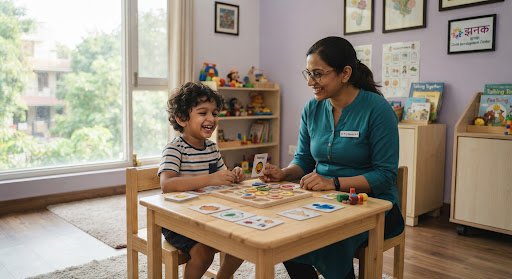
verified
ASHA & RCI Validated Frameworks
Pragmatic Profile & CCC-2 Observational Toolkits
psychology_alt
THE NUANCE OF PRAGMATICS
Decoding the Invisible Grammar of Human Togetherness
Pragmatic language represents how words are used in real social contexts. It includes adapting tone for different listeners (a classmate versus a school principal), knowing when to take conversational turns, decoding subtle facial micro-expressions, interpreting colloquial phrases, and honoring personal physical boundary space.
Many bright, articulate children can memorize encyclopedia facts or speak with sophisticated vocabularies, yet find themselves puzzled or excluded in unstructured play areas or bustling school cafeterias. At JHANAK, our guiding clinical principle is authentic social connection over artificial masking. We never demand that a child suppress their natural autistic or neurodivergent traits; instead, we equip them with self-advocacy tools and social navigational clarity so they can build friendships rooted in genuine mutual respect.
balance
Our Neurodiversity-Affirming Paradigm
check_circle
Mutual Understanding (The Double Empathy Problem)
Recognizing that communication breakdowns occur across neurotypes, not as a single unilateral defect in the child.
check_circle
Boundary Integrity & Self-Advocacy
Teaching children how to comfortably say “I need a quiet break” or “Can you explain that joke?” rather than forcing quiet compliance.
check_circle
Comfortable Eye Contact Alternatives
Focusing on active collaborative presence rather than demanding uncomfortable direct eye gaze.
Observation Guidance
Everyday Patterns Where Clinical Guidance Brings Ease
Caregivers and teachers frequently spot these nuances across Delhi school settings, family gatherings, and playground interactions.
forum
Conversation Reciprocity
Difficulty starting a dialogue, smoothly shifting subjects, or sharing conversational floor time, often leading to monologue-style talks on hyper-focused interests.
Support: Conversational Turn-Taking Ladders
visibility
Reading Non-Verbal Cues
Overlooking signs of peer disinterest, missing subtle shifts in tone or posture, or standing noticeably too close or far away during small-group huddles.
Support: Spatial Awareness & Tone Mapping
groups
Playground & Recess Navigation
Feeling overwhelmed by the unstructured noise and rapid pace of free recess, often lingering on the perimeter observing peers without knowing how to join.
Support: “Observe, Ask, Join” Play Entry Models
menu_book
Literal Interpretation & Nuance
Interpreting humorous idioms (“pulling your leg”) or playground sarcasm literally, which may create brief distress or feelings of being tricked by classmates.
Support: Idiomatic & Figurative Translation
favorite
Emotional Expression & Empathy
Holding deep empathy internally but freezing when needing to articulate comforting words or deciphering why a classmate is suddenly disheartened.
Support: Somatic Emotion Identification
battery_alert
Social Fatigue & Peer Overwhelm
Experiencing severe exhaustion, irritability, or complete communicative shutdown after long days of school socialization, birthday gatherings, or family functions.
Support: Social Battery Pacing & Rest Protocols
Our Integrated Approach
The Six Pillars of Social Fluency at Jhanak
Structured, clinical evidence combined with spontaneous play in our specialized Greater Kailash suites.
01
record_voice_over
Speech-Language Pragmatics
Targeting structural conversational exchange, reference tracking, asking contingent questions, and tailoring linguistic register across varying adult and peer contexts.
02
supervised_user_circle
Micro-Group Social Circles
Facilitated gatherings of 3 to 5 age-matched children in our sensory-balanced suites. Children practice board-game turn taking, shared construction projects, and light negotiation.
03
toys
Symbolic & Cooperative Play
Fostering imaginative roleplay, shared scenario generation, and joint attention schemes where joy and mutual laughter replace anxiety.
04
psychology
Pediatric Psychology & Anxiety
Equipping sensitive children with gentle cognitive grounding rituals, somatic de-escalation for peer rejection dread, and healthy boundary expression.
05
auto_stories
Social Story Scaffolding
Utilizing personalized graphic narratives to prepare for complex Delhi childhood milestones: Diwali melas, birthday parties, inter-house sports days, and group bus commutes.
06
family_restroom
Family & Sibling Coaching
Empowering parents and siblings with peaceful household communication structures that cultivate spontaneous peer play without micromanaging.
Methodology & Progression
The Jhanak 4-Step Social Growth Journey
A phased, clinically monitored roadmap bridging clinical rooms to real school environments.
01
Pragmatic Baseline Assessment
In-depth 90-minute dual-specialist observational session evaluating pragmatic conversational intent, non-verbal comprehension, symbolic play readiness, and sensory coping thresholds.
Diagnostic Stage
arrow_forward
02
Multidisciplinary IEP Formulation
Our clinical speech pathologist, child psychologist, and family co-author 12-week neuro-affirming goals centered on connection milestones over rote script repetition.
Customized Plan
arrow_forward
03
Micro-Peer Experiential Suites
Weekly small-group sessions in GK-1 featuring cooperative board strategies, collaborative mural creation, dramatic roleplay, and guided constructive debate.
Experiential Practice
arrow_forward
04
Real-World Generalization
Direct liaison with school counselors and teachers to cultivate real-life recess buddy systems, birthday party success, and confident sibling playtime at home.
Lifelong Transfer
done_all
school
DELHI SCHOOL COLLABORATIVE INITIATIVE
Partnering Across South Delhi Classrooms for Seamless Recess Inclusion
A child’s progress in therapy should blossom where they spend the majority of their weekday: at school. Our clinical team works proactively with educators, special educators, and homeroom teachers across premier institutions in Vasant Vihar, Greater Kailash, Saket, Panchsheel Park, and Chanakyapuri.
check
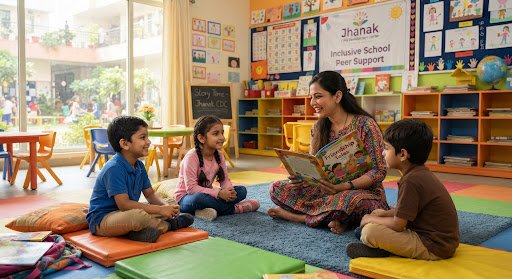
Structured “Recess Buddy” matching for low-stress free play
check
Quiet zones for sensory decompression during lunch hour
check
Teacher workshops on subtle peer exclusion prevention
check
Neuro-affirming classroom accommodation documentation
Practical Home Rituals
Gentle Family Practices to Nurture Social Ease
Simple, screen-free evening traditions that help your child decode social dynamics naturally in a warm, low-stakes home setting.
casino
Cooperative Board Gaming
Choose games where family members work as a team against the board (e.g., Peaceable Kingdom games) rather than fiercely competitive games, reinforcing collaboration over defeat anxiety.
Tip: 20 minutes before bedtime
movie
Movie Character "Mood Sleuthing"
While watching animated movies, pause during key moments and ask playful, low-pressure questions: “Look at his eyebrows and shoulders—what do you think he feels right now?”
Tip: Keep it playful, not a quiz
thermostat
Daily "Social Battery" Check-In
Ask the centre to confirm the relevant details before booking.
Tip: Validates introverted decompression
Clinical Leadership
Guided by Recognized Pediatric Specialists
Our senior clinical multidisciplinary panel brings decades of dedicated pediatric therapy practice in South Delhi.

Developmental Pediatrician
Dr. Prashant Kumar
MBBS, MD (Pediatrics), Fellow in Child Development
Ask about the professional’s experience with the concern and the assessment being proposed.
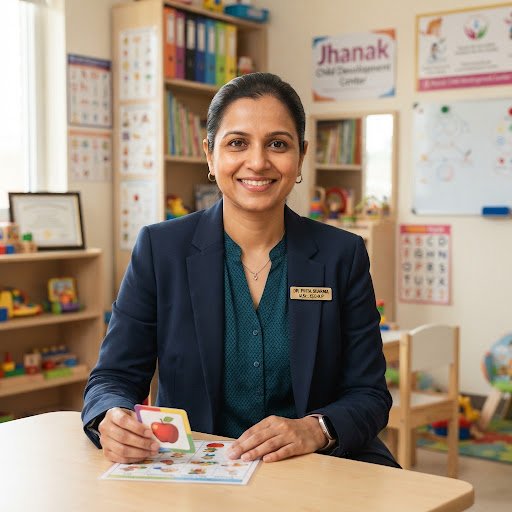
Lead Speech-Language Pathologist
Ananya Mehra
Confirm relevant qualifications with the centre.
Specialized in reciprocal dialogue mechanics, figurative comprehension, and neuro-affirming peer social circle facilitation for school-aged youth.

Child & Adolescent Psychologist
Psychology consultation
Confirm relevant qualifications
Expert in pediatric social anxiety, school refusal deconstruction, and self-advocacy coaching for neurodivergent children navigating group dynamics.
Caregiver Clarifications
Frequently Asked Questions
Clear, reassuring clinical answers regarding our social and pragmatic support processes.
Speech clarity (articulation) refers to how clearly a child produces individual sounds and sentences. Pragmatic language refers to the social use of communication: knowing how to use language for different goals (greeting, demanding, informing), adapting words to fit the listener (speaking differently to a friend vs. a teacher), and following unwritten rules of conversation like turn-taking and staying on topic. A child may have crystal-clear pronunciation and vast vocabulary while still needing support with social pragmatics.
If group support is proposed, ask how suitability, communication and support needs are considered. Confirm current group availability.
Absolutely not. Our clinical philosophy strictly rejects forced behavioral compliance and masking. Masking creates long-term psychological exhaustion and anxiety. Instead, we teach self-advocacy, perspective-taking, and collaborative problem-solving. We celebrate your child’s innate identity while giving them practical keys to unlock reciprocal social connection whenever they desire to connect.
Recess is often the loudest and least structured period of the school day. We collaborate with school counselors to implement pre-identified “recess buddy” systems, provide permission for short decompression breaks in quiet library corners, and coach children on simple “entry routines” (like asking to join an existing game of catch or reading together with another student).
Parents are essential co-therapists. At the conclusion of every therapy module, caregivers receive practical, everyday communication scaffolding strategies. From screen-free dinnertime conversation rituals to managing playdates at home with low-pressure frameworks, our clinicians provide continual feedback and step-by-step guidance.
Initiate Your Child’s Journey
Every Child Deserves to Feel Understood and Valued in Their World.
Reach out to our Greater Kailash I clinical team today to arrange a compassionate, evidence-grounded baseline assessment for social communication and peer connection.
location_on
JHANAK Center of Pediatric Excellence
R-274, Block R, Greater Kailash I (GK-1), New Delhi 110048
call
+91 76785 09500
schedule
Confirm current appointment hours when booking.
pin_drop
GK-1 Child Development Center
Request Clinical Consultation
Confirm appointment timing and the next step directly with the centre.